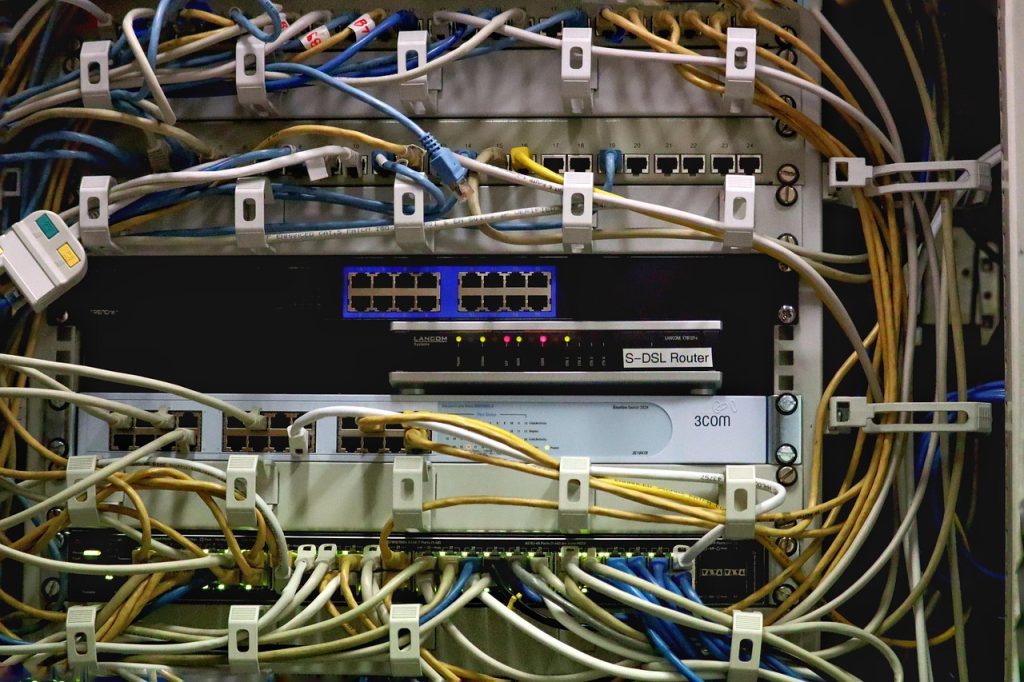
Dedicated server pricing in 2026 is more competitive and more confusing than ever. With providers offering everything from $40/month budget plans with older Xeon processors to $400+/month enterprise configurations with dual EPYC CPUs and NVMe RAID arrays, finding the right balance between cost and performance requires understanding exactly what you are paying for — and what you can safely skip. This guide breaks down the real costs of dedicated server hosting for gaming servers and high-traffic websites, helps you identify overpriced plans, and shows you how to match hardware to your workload without overbuying.
For a quick overview of current market pricing, compare dedicated server hosting plans and prices across major providers side by side.
2026 Dedicated Server Pricing Overview
The dedicated server market has bifurcated into two clear tiers. Budget providers (Hetzner, OVH, SoYouStart) offer older-generation hardware at $30–$80/month — typically Intel Xeon E3/E5 or first-gen AMD EPYC with DDR4 RAM and SATA SSDs. Mid-range and premium providers (Liquid Web, KnownHost, Interserver) offer current-generation Intel Xeon Gold or AMD EPYC 9004-series processors with DDR5 RAM and NVMe storage, ranging from $100–$300/month. Understanding when to pay more and when to save is the key to getting the best value.
| Tier | Monthly Price | Typical CPU | RAM | Storage | Bandwidth | Best For |
|---|---|---|---|---|---|---|
| Budget | $30–$80 | Intel Xeon E3-1270 v6 / AMD EPYC 7251 | 16–32 GB DDR4 | 500 GB–1 TB SATA SSD | 1 Gbps unmetered | Small Minecraft servers (10–30 players), low-traffic websites |
| Mid-Range | $80–$150 | Intel Xeon Gold 5418Y / AMD EPYC 7313 | 32–64 GB DDR4/DDR5 | 1–2 TB NVMe | 1 Gbps unmetered | Medium game servers (30–60 players), WooCommerce, CMS |
| High-Performance | $150–$300 | Intel Xeon Gold 6526Y / AMD EPYC 9354 | 64–128 GB DDR5 ECC | 2–4 TB NVMe RAID-1 | 1–10 Gbps unmetered | Large game servers (60–150 players), ARK, modded Minecraft, video streaming |
| Enterprise | $300–$600+ | Dual AMD EPYC 9654 / Dual Xeon Platinum 8580 | 256–512 GB DDR5 ECC | 4–8 TB NVMe RAID-10 | 10 Gbps unmetered | Multi-game hosts, MMOs, esports infrastructure, high-traffic APIs |
Where Budget Providers Cut Corners
A $45/month dedicated server from a budget provider sounds like a steal — but there are hidden costs. Budget hosts typically use older hardware that is fully depreciated on their books. An Intel Xeon E3-1270 v6 from 2017 has roughly one-third the single-thread performance of a modern Ryzen 5 7600. For a game server that is single-thread-bound, that budget server will struggle to maintain 20 players without tick-rate drops, while a $120/month server with a modern CPU handles 60+ players effortlessly.
Other common budget cuts include:
- SATA SSDs instead of NVMe: SATA SSDs cap at ~550 MB/s sequential throughput. NVMe drives deliver 3,500–7,000 MB/s. For game servers that save large world files (ARK: 500 MB+ per save), the difference in save time can be 30 seconds vs. 3 seconds.
- No DDoS protection: Game servers are frequent DDoS targets. Budget plans often provide only null-route mitigation, which takes your server offline entirely during an attack. Mid-range plans include always-on filtering.
- Limited support: Budget providers typically offer ticket-only support with 12–48 hour response times. If your game server goes down at 3 AM on a Saturday, you are on your own.
- No hardware monitoring: Budget hosts rarely replace failing hardware proactively. A failing PSU or disk may cause crashes for days or weeks before it is diagnosed.
When to Invest in Premium Hardware
- Pay more for CPU clock speed if you are running Minecraft, Valheim, Palworld, or any single-thread-bound game server. A 5.0+ GHz CPU is worth the premium.
- Pay more for RAM if you run modded packs (All the Mods, FTB) or host multiple game servers on one machine. Modded Minecraft can consume 12–20 GB per server instance.
- Pay more for network if your player base is global. Premium providers have better peering agreements and lower latency to more regions.
- Save on storage unless you need RAID-10 redundancy. A single NVMe SSD is sufficient for most game servers — RAID-1 mirrors add cost without read performance gains.
- Save on managed support if you are comfortable with Linux CLI, server configuration, and game server maintenance. Managed support adds $30–$100/month.
Hidden Costs: What Adds Up
- Setup fees: Some providers charge $50–$150 one-time setup, especially for custom configurations. Waiveable on annual contracts.
- cPanel / Plesk licenses: If you are running a web server on your dedicated machine, control panel licenses cost $15–$45/month. For game servers, you do not need them — manage via SSH.
- Off-site backups: Essential for game worlds, but often an extra $10–$30/month. Worth it — losing a 10,000-hour Minecraft world is catastrophic.
- IP addresses: Most plans include 1–2 IPs. Additional IPs cost $2–$5/month each. For multiple game servers on one machine, each needs its own port or IP.
- Bandwidth overages: Unmetered plans are common, but some “unlimited” plans throttle after a soft cap (e.g., 10 TB/month). Read the fine print.
Calculating Total Cost of Ownership (TCO)
A simple TCO calculation helps compare plans fairly:
TCO = (Monthly Fee × 12) + Setup Fee + (Backup Fee × 12) + (DDoS Protection Fee × 12) + Estimated Downtime Cost
For example: A $50/month budget server with a $100 setup fee, $15/month backups, and $10/month DDoS protection costs $1,000 in year one. A $120/month premium server with waived setup fee, included backups, and included DDoS protection costs $1,440. The premium server is 44% more expensive, but if it handles twice the player count and has zero unplanned downtime, the per-player cost is actually lower.
Real-World Pricing by Use Case (2026)
Small Minecraft server (10–20 players, vanilla): Budget tier ($40–$60/month). Look for Xeon E-2388G or Ryzen 5 7600 with 16–32 GB RAM and NVMe SSD. Avoid plans with SATA storage. Example: Hetzner AX42 ($49/month) — sufficient for small communities.
Modded Minecraft or ARK server (30–50 players): Mid-range ($100–$150/month). Require at least 32 GB RAM, high-clock CPU (4.5+ GHz), NVMe storage. Example: KnownHost semi-dedicated or Interserver dedicated.
Multi-game hosting (3–5 game servers, 100+ total players): High-performance ($200–$300/month). Need 64–128 GB RAM, 8+ high-clock cores, 1–10 Gbps network, and DDoS protection. Example: Liquid Web dedicated with AMD EPYC 7313.
High-traffic web application (500K+ monthly visitors): Mid-range to high-performance ($80–$200/month). Prioritize CPU cores over clock speed, 32–64 GB RAM, NVMe RAID-1, 10 Gbps bandwidth.
For a comprehensive comparison of providers across all price tiers, browse our dedicated server provider comparison with real-time pricing data.
Summary: The best dedicated server pricing in 2026 is not the cheapest plan — it is the plan that delivers adequate performance for your specific workload at the lowest total cost of ownership. Prioritize CPU clock speed for game servers, RAM capacity for modded games and multi-instance setups, and network quality for latency-sensitive applications. Avoid paying for managed support, enterprise storage arrays, or control panel licenses you do not need.
Related Articles:
 Game Server Hosting Comparison: The Five Specs That Actually Decide the Buy (2026)
 Dedicated Server Provider Due Diligence: 8 Checks That Separate Real Hosts from Resellers
 CPU vs RAM for Game Servers: A Diagnostic Playbook for Finding the Real Bottleneck
Dedicated Server for Hosting Multiple Game Servers: RAM, CPU, and Storage Requirements for Concurrent Game Instances
CPU vs RAM for Game Servers: A Diagnostic Playbook for Finding the Real Bottleneck
Dedicated Server for Hosting Multiple Game Servers: RAM, CPU, and Storage Requirements for Concurrent Game Instances
Leave a Reply
You must be logged in to post a comment.