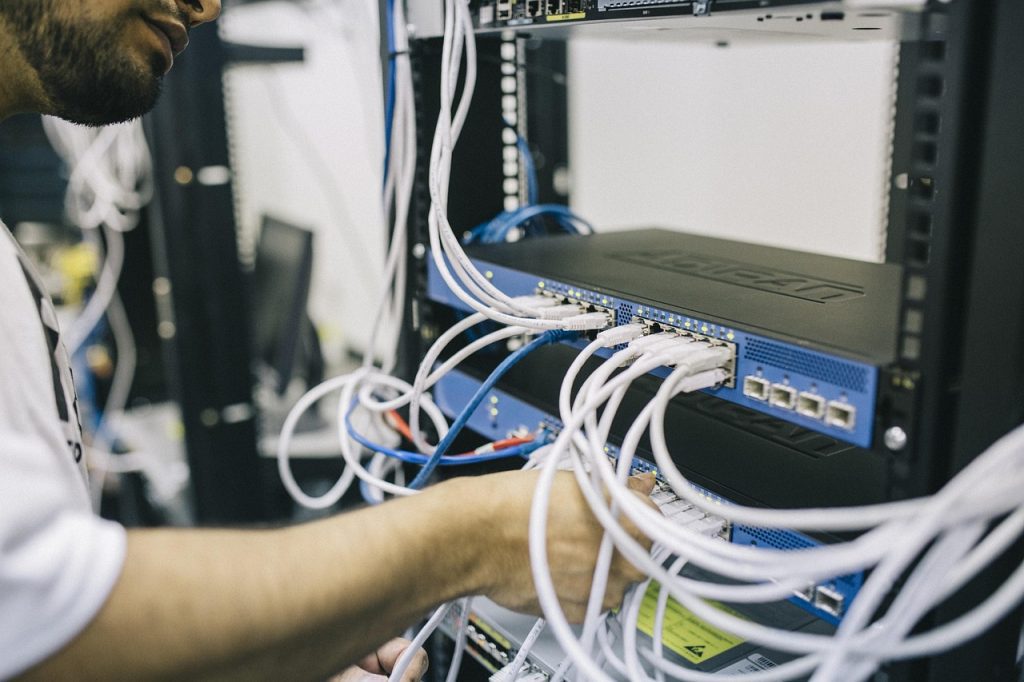
UAE data centers cluster in three zones — Dubai Internet City, the Jebel Ali Free Zone, and Abu Dhabi’s Masdar City — and renting dedicated hardware there costs 2–3× what the same spec costs in Europe or India. A typical 8-core Xeon with 64 GB of RAM and a 1 Gbps unmetered port runs AED 1,200–2,500/month in Dubai, versus roughly AED 400–700 for equivalent hardware in Amsterdam. The premium buys Gulf-region latency, in-country data residency, and the UAE’s stable power grid, all of which matter for regional game servers and business workloads serving the GCC market.
Latency is the real reason to pay that premium: Dubai to Riyadh sits around 30–40 ms, Dubai to Mumbai around 45–60 ms, and Dubai to London around 110–130 ms. If your audience is in the Gulf, that beats every European or Indian alternative. If your audience is global, the UAE rarely makes sense. Compare that trade-off against the numbers in our comparison table before committing to a 12-month contract.
Which UAE zone to host in
Dubai Internet City (DIC) hosts the largest concentration of carriers and IXP peering in the region, with direct connectivity to Etisalat and du, the two major Emirati ISPs. Jebel Ali Free Zone offers the same connectivity class at slightly lower rack pricing, and Masdar City in Abu Dhabi is the choice for government-adjacent workloads. For gaming or SaaS aimed at Gulf users, DIC or JAFZA is where the peering is — a server in either reaches the other at under 3 ms.
Geography inside the Emirates matters less than the peering agreement: a cheap server on a residential-grade line in Sharjah will route Gulf traffic through international exchanges, adding 20–40 ms. Always confirm that the provider peers locally with both Etisalat (the incumbent, now branded e&) and du, because a server that only peers with one carrier will see asymmetric latency from subscribers on the other. Request a traceroute to a known Etisalat and a known du IP before committing.
What you pay for in AED
| Configuration | Typical monthly price (AED) |
|---|---|
| 4-core Xeon, 32 GB RAM, 2× 480 GB SSD, 1 Gbps | 900–1,400 |
| 8-core Xeon, 64 GB RAM, 2× 1 TB NVMe, 1 Gbps unmetered | 1,500–2,500 |
| 16-core EPYC, 128 GB RAM, 2× 2 TB NVMe, 10 Gbps metered | 3,500–6,000 |
Quoted prices usually exclude VAT (5%), setup fees (AED 200–500 one-time), and IP transit overages. The 1 Gbps “unmetered” port is typically fair-use capped around 5–10 TB/month, so read the AUP before assuming you can saturate it. A 10 Gbps port is metered by the TB in this region — expect AED 50–150 per TB of transit over the included allocation, which makes bandwidth-heavy workloads (game server updates, media streaming, large backups) significantly more expensive than in Europe or the US.
Licensing and data residency considerations
The UAE has data protection regulations (PDPL, effective 2022) that apply to personal data of UAE residents, and some sectors — finance, health, government-adjacent — require in-country hosting. For a game server or a general web workload, the main practical constraint is content regulation: the TDRA can block content it considers objectionable, so the same moderation rules you follow on any public server apply here with less tolerance for gray areas. If you operate a game server with open voice chat, log moderation actions and be ready to respond to takedown requests quickly.
Companies registered in free zones (DIC, JAFZA, Masdar) can often host in the same zone under a single licensing umbrella, which simplifies invoicing and data-residency paperwork. That convenience is priced in — free-zone rack space typically carries a 10–20% premium over the same hardware outside the zone. For a hobby server or a small community, the extra paperwork is rarely worth it; for a business with UAE customers, the compliance angle often justifies the cost.
Backup and support realities
UAE providers commonly charge extra for off-site backups, and “remote hands” services are billed per incident. Budget for your own backup pipeline — nightly encrypted rsync to a bucket outside the region is the cheapest insurance — and confirm whether the provider offers out-of-band IPMI/KVM access, which matters when the network stack breaks. Ask for the support SLA in writing; a 30-minute response promise is common, but actual hardware replacement can stretch to next-day if parts must clear customs. A spare-parts agreement (advance replacement) is worth negotiating for business-critical workloads.
Weigh the Gulf-latency benefit against the 2–3× cost premium using the full specs in our provider table, which includes both regional and offshore options so you can see exactly what the UAE markup buys.
If the UAE premium is hard to justify, InterServer’s US-based dedicated servers with 10 Gbps ports are a strong offshore alternative for latency-tolerant workloads — browse the current InterServer dedicated server lineup to compare specs and pricing.
Related Articles:
 Game Community Server Sizing: The Four Hardware Budgets That Set Your Ceiling
 Dedicated Server vs Cloud for Gaming: 2026 Latency, Cost, and Performance Comparison
Dedicated Server for Enshrouded: Hardware Specs and Hosting Guide 2026
ARK: Survival Ascended Server: RAM, CPU, and Config Tuning for 10–100 Players
Dedicated Server vs Cloud for Gaming: 2026 Latency, Cost, and Performance Comparison
Dedicated Server for Enshrouded: Hardware Specs and Hosting Guide 2026
ARK: Survival Ascended Server: RAM, CPU, and Config Tuning for 10–100 Players
Leave a Reply
You must be logged in to post a comment.