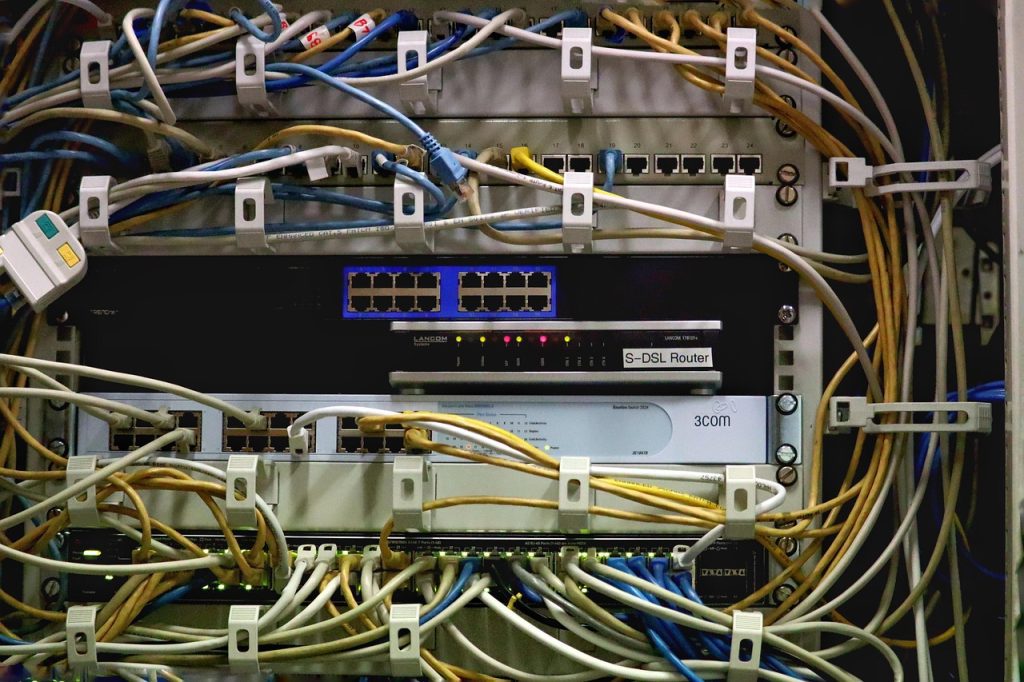
Europe runs more dedicated servers per square kilometer than any other region, and for game communities and high-traffic sites the choice of data center hub can matter more than the hardware inside the box. Distance between the server and the player base translates directly into latency, and latency is the number players feel on every tick. This guide covers where European providers actually colocate hardware, what latency budgets real games require, and what you should expect to pay in 2026.
Before you commit to a city, it helps to compare dedicated server providers on our comparison table so you can see which ones maintain infrastructure in the region you need. The sections below explain what to verify once you have narrowed the list.
Where European Game Servers Are Hosted
The traditional European hubs are the FLAP cities: Frankfurt, London, Amsterdam, and Paris. Frankfurt hosts DE-CIX, the largest internet exchange in the world by peak throughput, which is why most game hosts and CDNs put at least one point of presence there. Amsterdam’s AMS-IX is the second major exchange, and London remains the entry point for transatlantic traffic. Beyond the big four, Stockholm and Helsinki dominate Northern Europe, Warsaw covers Central and Eastern Europe, and Milan and Madrid anchor the south. A host that offers servers in several of these cities lets you place the box close to your actual player base instead of settling for the cheapest location.
A second wave of hubs is maturing quickly. Warsaw now carries a large share of Central and Eastern European game traffic, Milan and Madrid serve Southern Europe with lower latency than Frankfurt can offer, and the Nordic region keeps its lead for cheap power and cool climates. For communities split across the continent, the practical answer is often two smaller servers in different hubs rather than one oversized box in Frankfurt.
Latency Budgets for Real-Time Games
Fiber optic links add roughly 1 millisecond of latency per 100 kilometers of straight-line distance, plus switching overhead at each hop. That means a Frankfurt server serving players in Warsaw (about 900 km away) adds roughly 10-15 ms of round-trip time, while serving players in Madrid (about 1,800 km) adds closer to 25-30 ms. Different genres tolerate different budgets:
| Game type | Acceptable server ping | Typical examples |
|---|---|---|
| Fighting / racing | 20-30 ms | Tekken 8, Gran Turismo lobbies |
| Competitive FPS | 40-60 ms | CS2, Valorant, Rainbow Six |
| Survival / MMO | 80-120 ms | Rust, ARK, WoW-style MMOs |
| Turn-based / casual | 150 ms+ | Strategy, card games |
Five Checks Before You Rent in Europe
Price per core looks similar across European providers, so the differentiators are operational. Run through this list before signing:
- Peering: ask whether the host peers at DE-CIX or AMS-IX and whether the IP range is announced over BGP with local transit providers, not just a single upstream.
- DDoS scrubbing: confirm mitigation is delivered in-region, not backhauled to another continent, which would add 50-100 ms during an attack.
- Data residency: if your users or business are EU-based, the server should stay inside the EU to keep processing under GDPR-compliant terms.
- Bandwidth terms: check whether the plan is truly unmetered or a metered burst; 10 Gbps ports with a 10 TB cap are common in the mid-range.
- Hardware generation: prefer AMD EPYC 7003/9004 or Intel Xeon Scalable Gen 4/5 over decade-old E5-2600 parts.
2026 Pricing Ranges for European Dedicated Servers
European pricing includes VAT and higher power costs than North America, so budgets run roughly 15-25% above US equivalents. Typical monthly ranges:
| Tier | Typical hardware | Monthly price (EUR) |
|---|---|---|
| Entry | Xeon E-2334 / EPYC 7262, 16-32 GB RAM, 2×1 TB NVMe | 60-100 |
| Mid | Xeon Silver 4314 / EPYC 7313, 64 GB RAM, NVMe RAID | 120-200 |
| High | Xeon Gold 6330 / EPYC 7443P, 128 GB+ RAM | 250-450 |
IPv4 addresses have also become a line item: expect 1-2 EUR per IP per month on top of the server fee, and check whether setup fees are waived on longer contracts.
Port speed is the other variable most spec sheets gloss over. Mid-range European plans ship with a 1 Gbps port, 10 Gbps is now standard on higher tiers, and flagship EPYC configurations reach 20-25 Gbps. For game hosting, a 10 Gbps port with a generous transfer cap matters more than a slightly bigger CPU: patch days, mod downloads, and server-to-server transfers can saturate a 1 Gbps port for hours.
How to Pick the Right European Location
Start from your player or visitor map: if most traffic is Central European, Frankfurt is hard to beat; if it splits between Western and Eastern Europe, consider a host with boxes in both Frankfurt and Warsaw so you can run two instances. Whatever you choose, see the full specs and pricing across providers before paying, because identical-looking plans differ a lot in port speed, IP costs, and hardware age.
Test before you commit. Reputable hosts offer a 24-72 hour trial or a prorated refund window; use it to run traceroutes and ping tests from the cities where your players actually live instead of trusting a provider’s latency map. Looking-glass servers published by the host give a rough read on routing quality before you spend anything.
For a straightforward, well-priced dedicated server in Europe with 10 Gbps options and transparent setup, check current InterServer dedicated server pricing. They offer self-managed and managed tiers, so you can start small and scale the core count as your community grows.
Related Articles:
 ARK Server Tuning in 2026: ASE vs ASA Config Flags, RAM Allocation, and Save Performance
 Palworld Dedicated Server Hosting: Hardware Requirements and Best Providers
Satisfactory Server Performance: CPU Load, RAM Usage, and Tick Rate Tuning
Terraria Dedicated Server: Hardware Specs, TShock Setup, and Tuning
Palworld Dedicated Server Hosting: Hardware Requirements and Best Providers
Satisfactory Server Performance: CPU Load, RAM Usage, and Tick Rate Tuning
Terraria Dedicated Server: Hardware Specs, TShock Setup, and Tuning
Leave a Reply
You must be logged in to post a comment.